
Jury convicts Vermont man of attempted murder in shooting of 3 students
U.S. Court News

A jury on Monday convicted a Vermont man of attempted murder in the shootings of three Palestinian college students who were walking near his home, rejecting an insanity defense rooted in his claims that he was acting on orders from U.S. and Israeli intelligence agencies.
Jason Eaton faces up to life in prison in the November 2023 attack in Burlington, which paralyzed Hisham Awartani from the waist down and wounded his friends, Tahseen Aliahmad and Kinnan Abdalhamid.
The men, all 20 at the time, had been visiting Awartani’s grandmother for Thanksgiving. They were smoking cigarettes and speaking a mix of English and Arabic as they walked near the University of Vermont campus after dusk. Two of them were wearing traditional Palestinian scarves known as keffiyehs.
The jury deliberated for several hours before reaching its verdict after a weeklong trial that saw testimony from the three men, who recounted how their stroll ended in bloodshed, and defense and prosecution psychiatric experts who offered differing views of Eaton’s mental health and criminal culpability.
Eaton, 51, stared ahead blankly as the verdict was read, standing alongside his lawyers — public defenders whom he tried to fire last week over his concerns that his defense hadn’t been “adequately presented.” Judge John Pacht, who blocked Eaton’s midtrial bid to act as his own lawyer, ordered him jailed pending sentencing, which has yet to be scheduled.
Awartani and Aliahmad watched from the front row of the courtroom gallery, smiling and hugging people around them.
“The verdict cannot undo what happened or erase the trauma our families still carry, but it affirms something fundamental: Jason Eaton is responsible for what he did,” Awartani’s mother, Elizabeth Price, told reporters afterward.
Eaton had pleaded not guilty but did not dispute that he was the shooter. He claimed that the CIA and Mossad transmitted their orders via FM radio and that God was commanding him to protect his Jewish neighbors. His lawyers had urged jurors to find him not guilty by reason of insanity, an outcome that would’ve spared him from prison but could have required that he undergo mental health treatment.
Eaton’s lawyers, Margaret Jansch and Joshua O’Hara, said he had struggled with mental health issues his whole life, including diagnoses of attention deficit, post-traumatic stress, bipolar, depression and borderline personality disorders, culminating in a psychotic break after losing his job at a credit union two weeks before the shooting.
Prosecutor Sarah George countered that Eaton was a narcissist but not legally insane. He had a grandiose sense of self-importance and lacked empathy but was fully aware of the criminality of his conduct, George said in a closing argument. He appeared nervous when police arrived at his door, repeatedly asked for a lawyer and hasn’t claimed to have received any other messages directing his actions, she said.
Eaton told officers that he had a shotgun in his apartment, but didn’t disclose that he had other weapons, including a Ruger .380-caliber handgun that was found in a bedroom dresser and that crime lab testing concluded was used in the shooting, said George, the Chittenden County state’s attorney.
The shooting, weeks after the start of the Israel-Hamas war, shook Burlington, and reverberated in the West Bank, where the three wounded men grew up and became friends as schoolmates in Ramallah before moving to the U.S. for college. It spawned calls for a hate crime investigation.
But no hate crime charges were filed as questions persisted about whether anti-Palestinian animus, an altered mental state or something else had compelled Eaton to open fire. After the verdict, Awartani’s mother said Eaton’s hateful rhetoric, aired at the trial, had made it clear why he targeted her son.
Related listings
-
David Crowley wins Democratic primary for Wisconsin governor
U.S. Court News 08/12/2026Moderate Democrat David Crowley won the Wisconsin primary for governor, defeating a democratic socialist who fell short while trying to deliver another win for progressives in a battleground state.Crowley, the Milwaukee county executive, is vying to ...
-
Texas teen who fatally stabbed track athlete at school meet found guilty
U.S. Court News 06/11/2026A Texas teenager who fatally stabbed a 17-year-old track athlete from a rival team during a high school meet was convicted of murder and sentenced to 35 years in prison Tuesday in a case that drew wide attention beyond the booming Dallas suburb where...
-
Trump administration reaches a trade deal to lower Taiwan’s tariff barriers
U.S. Court News 02/13/2026The Trump administration reached a trade deal with Taiwan on Thursday, with Taiwan agreeing to remove or reduce 99% of its tariff barriers, the office of the U.S. Trade Representative said.The agreement comes as the U.S. remains reliant on Taiwan for...
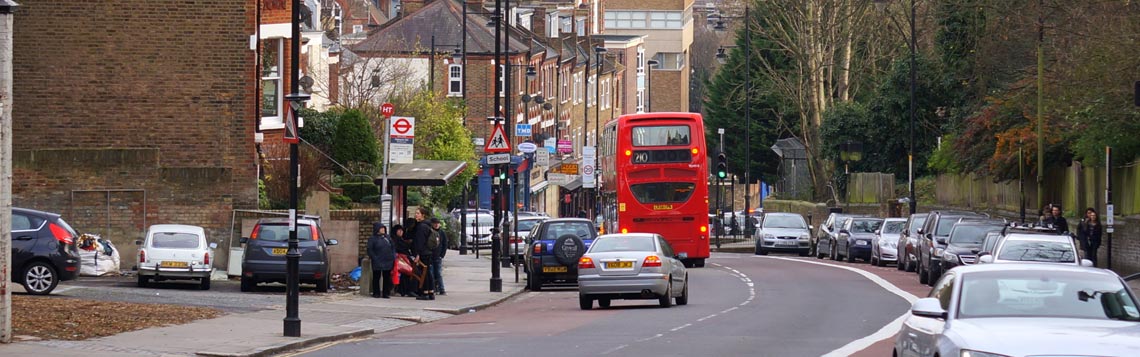
Texas Adopts Statewide Texting-While-Driving Ban
Effective September 1, 2017, Texas will become the 47th state to pass a statewide ban on texting while driving. Governor Abbott’s signing of House Bill 62 is an effort to unify Texas under a uniform ban and remedy the “patchwork quilt of regulations that dictate driving practices in Texas.”
The bill specifically prohibits drivers from reading, writing, or sending an electronic message on a device unless the vehicle is stopped. That includes texting and emailing. It does not, however, prohibit dialing a number to call someone, talking on the phone using a hands-free device, or using the phone’s GPS system.
Violations would be punishable by a fine ranging from $25 to $99, to be set by each municipality. Although penalties could rise to as much as $200 for repeat offenders.
Studies have found that a driver’s reaction time is half as much when a driver is distracted by sending or reading a text message. According to state officials, in 2015 more than 105,000 traffic accidents in Texas involved distracted driving, leading to at least 476 fatalities.