
Justice Department steps up pressure on cartels’ financial networks
Headline Legal News

The Justice Department is taking direct aim at the financial lifelines of Mexico’s most violent drug cartels, targeting money brokers who prosecutors say have adapted to intensified enforcement by increasingly routing drug profits through cryptocurrency from American cities to cartel leaders in Mexico.
The cases of four defendants recently sent from Mexico to the U.S. for prosecution provide a glimpse into shadowy money laundering networks that allow the Jalisco New Generation Cartel and other violent groups to continue pumping dangerous drugs into American communities. The prosecutions underscore the Justice Department’s efforts to turn up the pressure on cartels and stay ahead of their sophisticated and ever-evolving tactics to launder money across the border without detection.
By targeting alleged money brokers — rather than street-level traffickers — prosecutors say they are aiming at a choke point they believe is essential to the cartels sustaining their operations as law enforcement pressure mounts on more visible drug routes.
Since the beginning of President Donald Trump’s second administration, the Mexican government has turned over more than 90 high-level defendants with ties to cartels in three transfers now at the center of a legal debate in Mexico. The defendants were wanted by U.S. prosecutors for crimes including drug trafficking, human smuggling and money laundering.
Senior Justice Department officials say bringing cartel figures to the United States is designed to do more than be a deterrent message. It could also lead to indictments against other high-level leaders if defendants cooperate, allowing prosecutors to reach higher into cartel leadership. Under Trump’s Republican administration, the Justice Department has restructured the Criminal Division to integrate narcotics prosecutors with anti-money laundering experts to better target cartels and to reflect a broader shift toward targeting the financial systems that sustain their operations.
The latest transfers to the U.S. include alleged Mexico-based money brokers, who authorities say oversee the movement of drug proceeds and pocket a percentage of the money that returns to the cartels as a commission, according to court papers. The brokers arrange for cash to be picked up in cities across the U.S. and conceal the money to get it across the border, often through digital assets as law enforcement has cut off other methods.
Prosecutors “want to hear on the distribution side how it works, who is involved, and seek additional indictments, and on the money laundering side, exactly the methods that they are using to get the money out of the United States through the U.S. banks,” Duva said. “There’s bulk cash smuggling that has been going on since the beginning of time, and then also sort of the newer trend of taking the cash, buying cryptocurrency, and then trading that cryptocurrency.”
Eduardo Rigoberto Velasco Calderon, Eliomar Segura Torres, Manuel Ignacio Correa and Cesar Linares-Orozco face money laundering conspiracy charges in indictments filed in Kentucky’s federal court. An attorney for Linares-Orozco declined to comment in an email to the AP, and no attorneys were listed in court papers for the other defendants.
The January transfer of 37 defendants from Mexico to the U.S. marked the third of its kind under Trump’s second term. Observers have described the transfers as an offering by Mexican authorities to offset mounting threats by Trump to take military action against cartels.
A group of lawyers and family members of cartel figures have accused Mexico of breaking the law by sending them without an extradition order. Mexico’s government has maintained the transfers were legal, carried out in the name of national security.
Related listings
-
Trump is threatening to block a new bridge between Detroit and Canada
Headline Legal News 02/09/2026President Donald Trump on Monday threatened to block the opening of a new Canadian-built bridge across the Detroit River, demanding that Canada turn over at least half of the ownership of the bridge and agree to other unspecified demands in his lates...
-
Do Kwon sentenced to 15 years in prison for $40 billion stablecoin fraud
Headline Legal News 12/11/2025Onetime cryptocurrency mogul Do Kwon was sentenced Thursday to 15 years in prison after a $40 billion crash revealed his crypto ecosystem to be a fraud. Victims said the 34-year-old financial technology whiz weaponized their trust to convince them th...
-
Longest government shutdown in US history ends after 43 days
Headline Legal News 11/13/2025President Donald Trump signed a government funding bill Wednesday night, ending a record 43-day shutdown that caused financial stress for federal workers who went without paychecks, stranded scores of travelers at airports and generated long lines at...
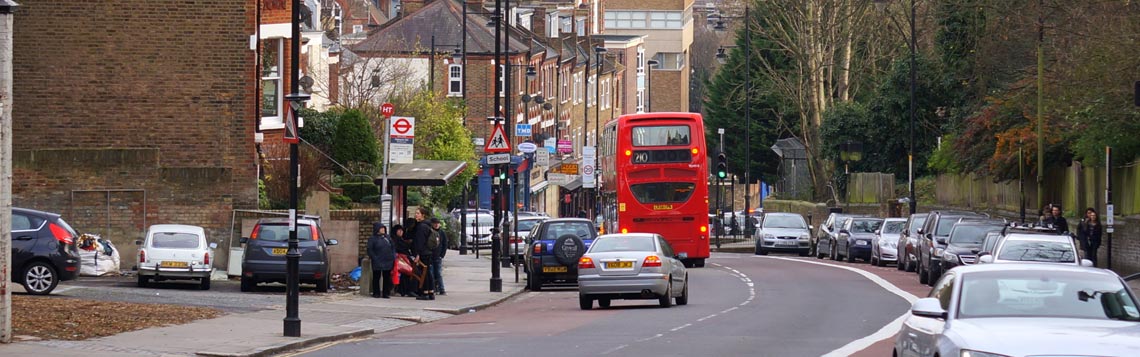
Texas Adopts Statewide Texting-While-Driving Ban
Effective September 1, 2017, Texas will become the 47th state to pass a statewide ban on texting while driving. Governor Abbott’s signing of House Bill 62 is an effort to unify Texas under a uniform ban and remedy the “patchwork quilt of regulations that dictate driving practices in Texas.”
The bill specifically prohibits drivers from reading, writing, or sending an electronic message on a device unless the vehicle is stopped. That includes texting and emailing. It does not, however, prohibit dialing a number to call someone, talking on the phone using a hands-free device, or using the phone’s GPS system.
Violations would be punishable by a fine ranging from $25 to $99, to be set by each municipality. Although penalties could rise to as much as $200 for repeat offenders.
Studies have found that a driver’s reaction time is half as much when a driver is distracted by sending or reading a text message. According to state officials, in 2015 more than 105,000 traffic accidents in Texas involved distracted driving, leading to at least 476 fatalities.