
Trump flexes executive power with unprecedented flouting of lower court rulings
Legal Marketing
When a federal judge shot down a Trump administration policy of holding immigrants without bond last December, it seemed like a serious blow to the president's mass deportation effort.
Instead, a top Justice Department official insisted the ruling wasn't binding, and the administration continued denying detainees around the country a chance for release.
By February, the district court judge, Sunshine Sykes, was fed up. Sykes, a nominee of President Joe Biden, accused Trump officials in a ruling that month of seeking "to erode any semblance of separation of powers," adding that they could "only do so in a world where the Constitution does not exist."
Hardly isolated, the case illustrates a broader pattern of defiance of lower court decisions in President Donald Trump's second term.
The failure of Trump officials to follow court orders has been highlighted most notably in individual immigration cases. But a review of hundreds of pages of court records by The Associated Press also shows an extraordinary record of violations in lawsuits over policy changes and other moves.
In the second Trump administration's first 15 months in office, district court judges ruled it was violating an order in at least 31 lawsuits over a wide range of issues, including mass layoffs, deportations, spending cuts and immigration practices, the AP's review of court records found. That's about one out of every eight lawsuits in which courts have at least temporarily blocked the administration's actions.
The Republican administration's power struggle with federal courts — which is testing basic tenets of U.S. democracy — reflects an expansive view of executive authority that has also challenged the independence of federal agencies, a president's ethical obligations, and the U.S.'s role in the international order.
The violations in the 31 lawsuits are in addition to more than 250 instances of noncompliance judges have recently highlighted in individual immigration petitions — from failing to return property to keeping immigrants locked up past court-ordered release dates.
Legal scholars and former federal judges said they could recall at most a few violations of court rulings over the full four-year terms of other recent presidential administrations, including Trump's first time in office. They also noted previous administrations were generally apologetic when confronted by judges; the Trump administration's Justice Department has been outright combative in some cases.
"What the court system is experiencing in the last year and a half is just qualitatively completely different from anything that's preceded it," said Ryan Goodman, a law professor at New York University who studies federal courts and is tracking litigation against the Trump administration.
Though Trump officials eventually backed down in about a third of the 31 lawsuits, legal experts say their treatment of court orders poses serious dangers.
"The federal government should be the institution most devoted to the rule of law in this country," said David Super, a constitutional law scholar at Georgetown University. "When it ceases to feel itself bound, respect for the rule of law is likely to break down across the country."
The White House's aggressive policy moves have prompted a barrage of lawsuits — more than 700 and counting.
In October, U.S. District Judge William Smith took little time to conclude Homeland Security officials were flouting one of his orders. Smith, a nominee of George W. Bush, had blocked them from making billions of dollars in disaster relief funding to states contingent on cooperation with the president's immigration priorities.
Related listings
-
Federal judge finds Pentagon is violating court order to restore access to reporters
Legal Marketing 04/13/2026A federal judge on Thursday ruled that the Defense Department is violating his earlier order to restore access to the Pentagon for reporters, a setback in the administration's efforts to impede the work of journalists.U.S. District Judge Paul Friedma...
-
Lawyer for Biden accuser Tara Reade drops her as a client
Legal Marketing 05/19/2020The attorney working with Tara Reade, the former Joe Biden Senate staffer who alleged he sexually assaulted her in the 1990s, said Friday he is no longer representing her, just two weeks after he first began working with her.Douglas Wigdor said in a ...
-

Brazil's supreme court votes to make homophobia a crime
Legal Marketing 06/14/2019Brazil's supreme court officially made homophobia and transphobia crimes similar to racism on Thursday, with the final justices casting their votes in a ruling that comes amid fears the country's far-right administration is seeking to roll back LGBT ...
Texas Adopts Statewide Texting-While-Driving Ban
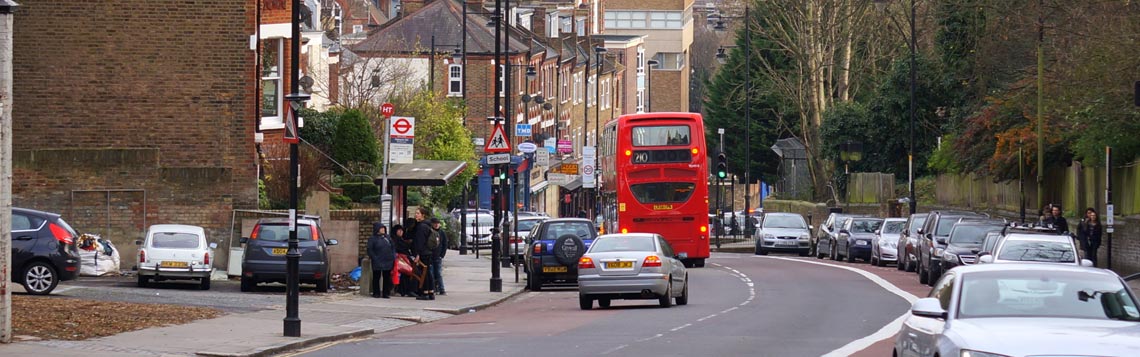
Effective September 1, 2017, Texas will become the 47th state to pass a statewide ban on texting while driving. Governor Abbott’s signing of House Bill 62 is an effort to unify Texas under a uniform ban and remedy the “patchwork quilt of regulations that dictate driving practices in Texas.”
The bill specifically prohibits drivers from reading, writing, or sending an electronic message on a device unless the vehicle is stopped. That includes texting and emailing. It does not, however, prohibit dialing a number to call someone, talking on the phone using a hands-free device, or using the phone’s GPS system.
Violations would be punishable by a fine ranging from $25 to $99, to be set by each municipality. Although penalties could rise to as much as $200 for repeat offenders.
Studies have found that a driver’s reaction time is half as much when a driver is distracted by sending or reading a text message. According to state officials, in 2015 more than 105,000 traffic accidents in Texas involved distracted driving, leading to at least 476 fatalities.