
US soldier used classified intel to win $400K Polymarket bet on Maduro raid
National News

A U.S. special forces soldier involved in the military operation to capture Venezuelan President Nicolás Maduro has been charged with using classified information about the mission to win more than $400,000 in an online betting market, federal officials announced Thursday.
Gannon Ken Van Dyke was part of the operation to capture Maduro in January and used his access to classified information to make money on the prediction market site Polymarket, the federal prosecutor's office in New York said.
He has been charged by the Justice Department with unlawful use of confidential government information for personal gain, theft of nonpublic government information, commodities fraud, wire fraud and making an unlawful monetary transaction. He could face years in prison.
Van Dyke, 38, was involved in the planning and execution of capturing Maduro for about a month beginning Dec. 8, 2025, according to the federal prosecutor's office. Even though he signed nondisclosure agreements promising to not divulge "any classified or sensitive information" related to the operations, prosecutors say the Army soldier used this information to make a series of bets related to Maduro being out of power by Jan. 31, 2026.
"This involved a U.S. soldier who allegedly took advantage of his position to profit off of a righteous military operation," FBI Director Kash Patel said in a post to social media.
A telephone number listed for Van Dyke in public records was not in service. There was not yet an attorney listed for him in court documents.
Polymarket, one of the largest prediction markets in the world, said it had found someone trading on classified government information, alerted the U.S. Department of Justice and "cooperated with their investigation."
"Insider trading has no place on Polymarket," the company said in a statement.
The Commodity Futures Trading Commission, the federal agency that regulates prediction markets, announced Thursday it had filed a parallel complaint against Van Dyke.
That complaint alleges that Van Dyke moved $35,000 from his personal bank account into a cryptocurrency exchange account on Dec. 26 — a little over a week before U.S. forces would fly into Caracas and seize Maduro.
Van Dyke used more than $32,500 to make a series of bets on when Maduro might be removed from power, according to the complaint. He placed those bets between Dec. 30 and Jan. 2, with the vast majority occurring the night of Jan. 2 — just hours before the first missiles would fall on Caracas.
In the early hours of Jan. 3, President Donald Trump posted on his social media platform a photo of the now-captured Venezuelan leader, wearing a gray sweatsuit, headphones and a blindfold.
The bets Van Dyke made on Maduro leaving power resulted in "more than $404,000 of profits," the complaint said. Bets on three other Venezuela-related contracts netted the solider more than $5,000, according to the document.
"The defendant was entrusted with confidential information about U.S. operations and yet took action that endangered U.S. national security and put the lives of American service members in harm's way," said Michael Selig, the commission's chairman.
The massive profits from the well-timed bets aroused public attention days after the raid and brought bipartisan calls for stricter regulation of the markets where people can wager on just about anything.
Officials allege that shortly after the operation, Van Dyke put most of the money he won in a foreign cryptocurrency vault and then into a new brokerage account. He also asked Polymarket to delete his account, saying he had lost access to his email associated with the account, according to the federal prosecutor's office.
Related listings
-
Minneapolis shooting scrambles Second Amendment politics for Trump
National News 01/20/2026Prominent Republicans and gun rights advocates helped elicit a White House turnabout this week after bristling over the administration’s characterization of Alex Pretti, the second person killed this month by a federal officer in Minneapolis, a...
-
Malaysia and Indonesia become the first countries to block Musk’s Grok
National News 01/13/2026Malaysia and Indonesia have become the first countries to block Grok, the artificial intelligence chatbot developed by Elon Musk’s company xAI, as concerns grew among global authorities that it was being misused to generate sexually explicit an...
-
Trump and top Iranian officials exchange threats over protests roiling Iran
National News 01/02/2026U.S. President Donald Trump and top Iranian officials exchanged dueling threats Friday as widening protests swept across parts of the Islamic Republic, further escalating tensions between the countries after America bombed Iranian nuclear sites in Ju...
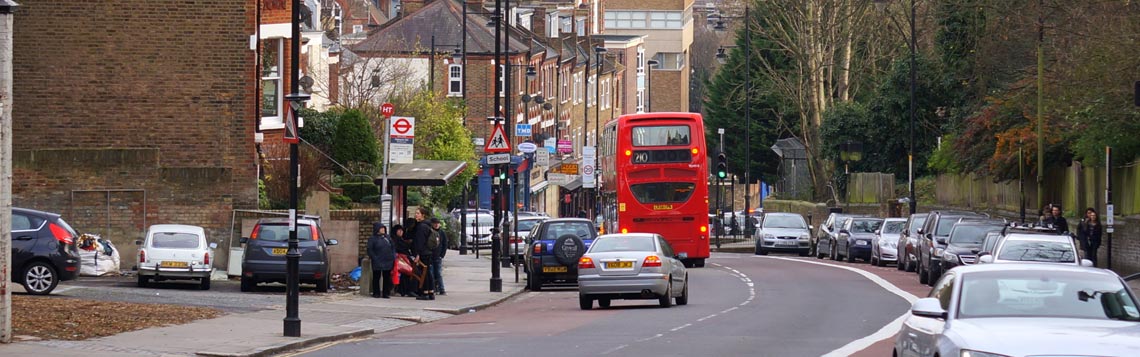
Texas Adopts Statewide Texting-While-Driving Ban
Effective September 1, 2017, Texas will become the 47th state to pass a statewide ban on texting while driving. Governor Abbott’s signing of House Bill 62 is an effort to unify Texas under a uniform ban and remedy the “patchwork quilt of regulations that dictate driving practices in Texas.”
The bill specifically prohibits drivers from reading, writing, or sending an electronic message on a device unless the vehicle is stopped. That includes texting and emailing. It does not, however, prohibit dialing a number to call someone, talking on the phone using a hands-free device, or using the phone’s GPS system.
Violations would be punishable by a fine ranging from $25 to $99, to be set by each municipality. Although penalties could rise to as much as $200 for repeat offenders.
Studies have found that a driver’s reaction time is half as much when a driver is distracted by sending or reading a text message. According to state officials, in 2015 more than 105,000 traffic accidents in Texas involved distracted driving, leading to at least 476 fatalities.